Date: May 28, 2025
Venue: Hashed Lounge, Seoul
Featuring: Chainlink Labs × Startale Cloud Services × Soneium
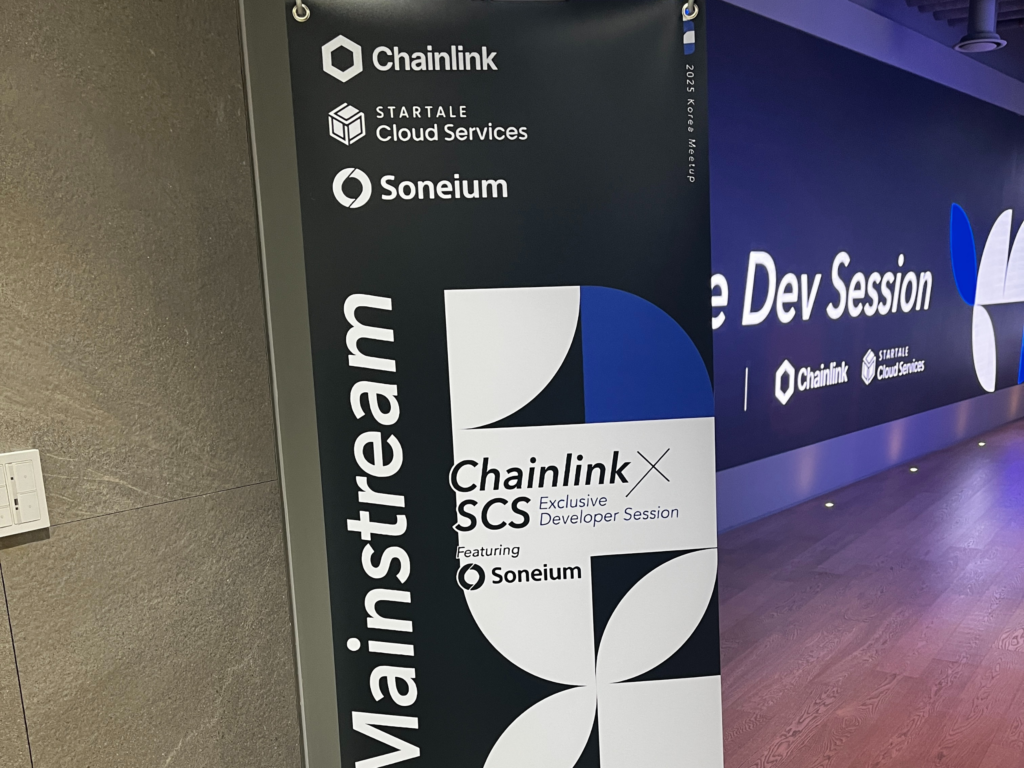
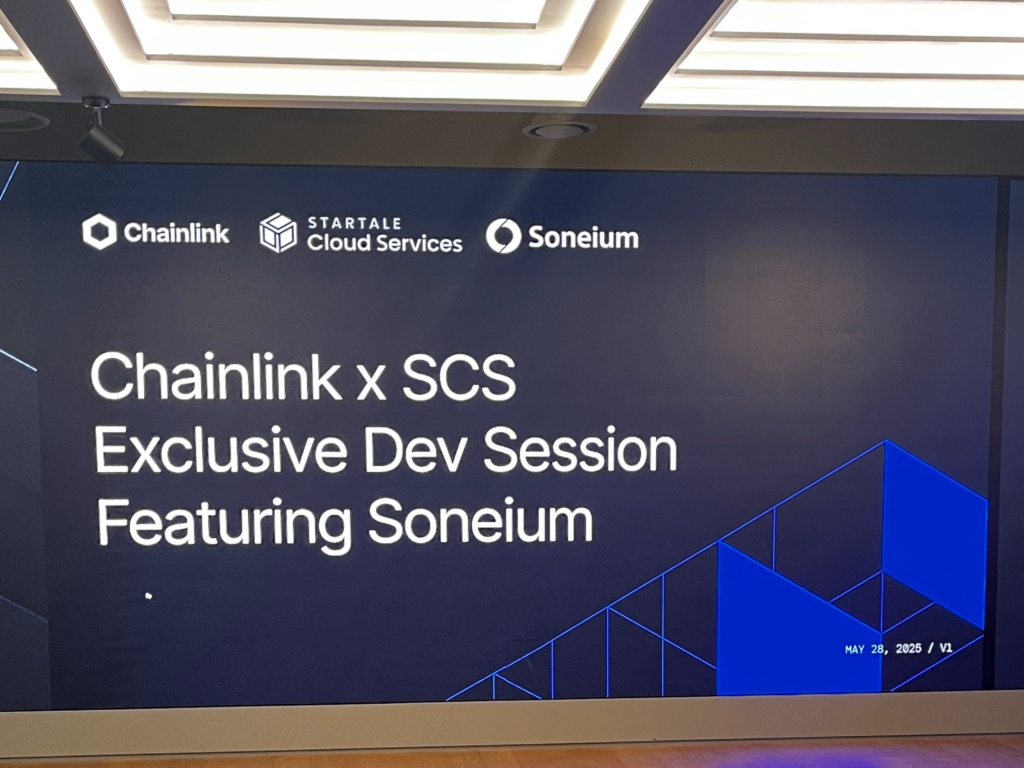
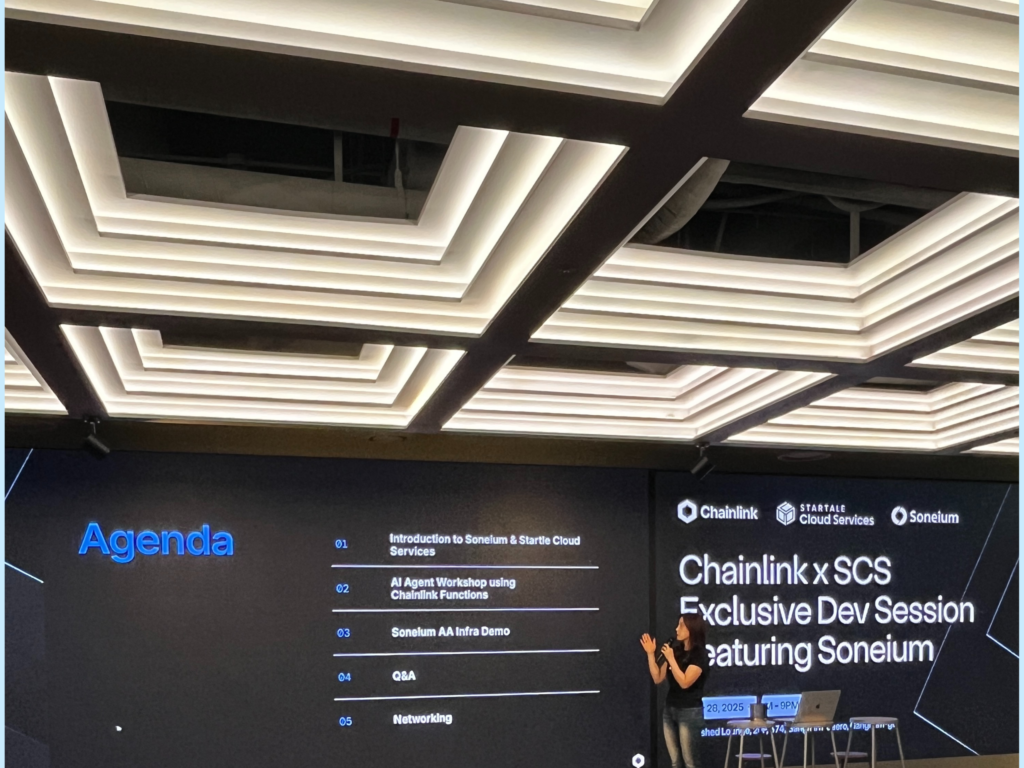
A Practical Bridge Between Off-Chain and On-Chain
The May 28 Chainlink x SCS Dev Session went beyond theory; it showcased a real, working PoC that proved how simple, seamless, and secure Web3 automation can be.
The demo illustrated how users could receive NFTs directly to their wallet simply by posting a tweet containing a coupon code and wallet address. No forms, no manual verification! just a social post triggering an automated on-chain reward.
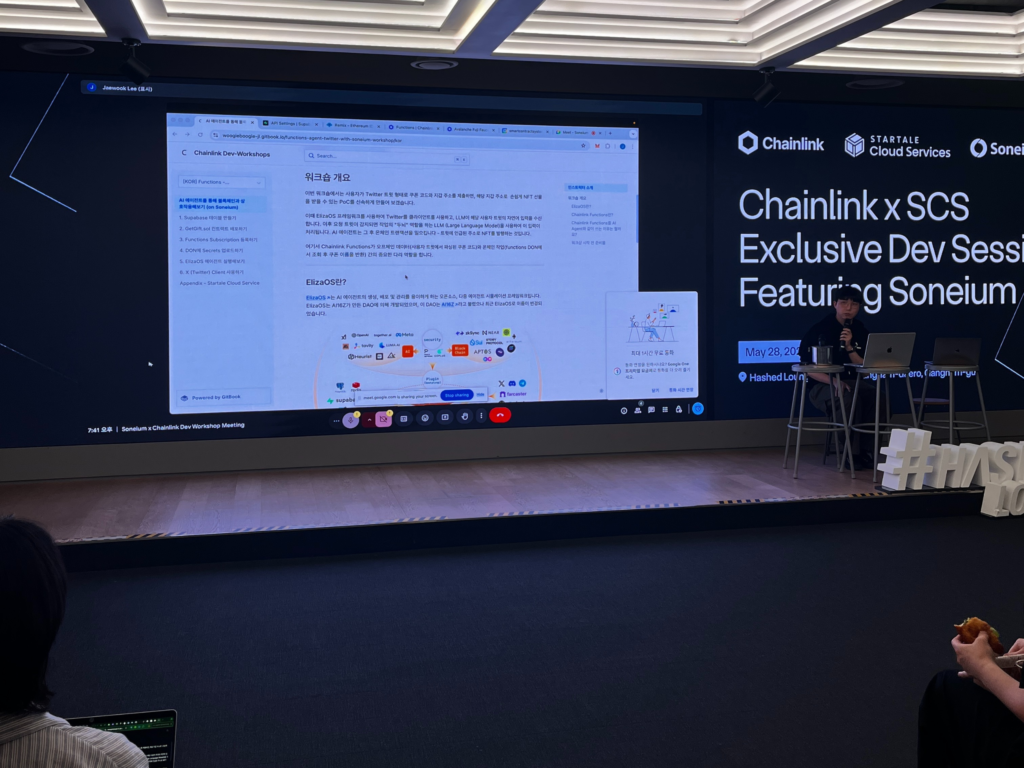
PoC Flow Summary
Here’s how the proof-of-concept worked in detail:
- User Action:
A participant tweets a line such asCOUPON: ABC123, WALLET: 0x1234...abcd - Off-Chain Verification:
A lightweight off-chain service monitors the tweets, validates the coupon code, filters spam, and checks for duplicates. - On-Chain Execution:
Once verified, Chainlink Functions securely transmit the data to a smart contract.
The contract mints and sends the NFT reward to the specified wallet address.
This end-to-end workflow demonstrated the power of Chainlink’s modular infrastructure, connecting social data, off-chain computation, and blockchain execution in a trustworthy way.
Key Takeaways
- Builder-friendly architecture:
Chainlink Functions and Automation eliminate the complexity of syncing off-chain events with on-chain logic. - Real-world applicability:
The use case can easily extend to event ticketing, loyalty rewards, or gated content NFTs — all with social verification as the trigger. - Security & Privacy:
The session discussed critical safeguards: rate-limiting, nonce validation, and alternatives to publicly posting wallet addresses (e.g., signed DM endpoints).
Session Highlights
- Discussion on how Chainlink Functions can power off-chain data triggers for NFT minting, payments, or proof-of-attendance tokens.
- Insights on integrating Twitter APIs and handling spam, duplicates, and coupon expiry logic.
- Live Q&A with developers emphasizing UX, cost optimization (gas efficiency), and security architecture.
Related Posts
Chainlink, Solana × CCIP Workshop — Event Recap
Date: September 15, 2025Venue: Ohooo, Itaewon, SeoulHosted by: Chainlink Labs…
The Era of Institutional Tokenization: How Chainlink Is Rebuilding Financial Market Infrastructure
Date: October 24, 2025By: JuliaCategories: SmartCon 2025, Institutional Finance, Tokenization…
Evolution to Ethereum: How Blockchain Became Programmable
TL;DR Bitcoin’s 2-layer projects (Mastercoin, Omni Layer, Tether) showed what…

